
An educational guide to accreditation, safety standards, international-patient services, and recovery arrangements — so you know what to look for.
When people research weight loss surgery abroad, they naturally focus on the operation itself. Yet the facility where a bariatric procedure is performed plays an equally important role in safety and outcomes. This guide explains — in neutral, educational terms — how hospitals are accredited, which quality signals are worth checking, what international-patient services usually cover, and how recovery-hotel stays commonly work. It names no specific provider; instead, it gives you a framework for evaluating any hospital you consider.
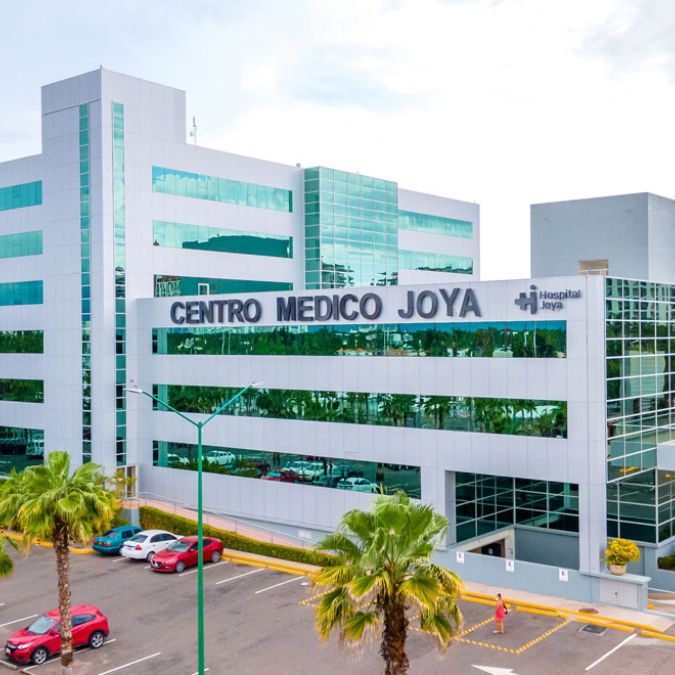
Puerto Vallarta and the surrounding Bahía de Banderas region have become a recognized destination for medical travelers, in part because several hospitals there operate to international standards and offer services designed for visitors from abroad. Facilities range from large multi-specialty hospitals to smaller surgical centers.
Understanding the difference between a general hospital, a specialty surgical center, and an outpatient clinic — and knowing which credentials each holds — helps you ask better questions and make an informed decision. The sections below walk through the key concepts one at a time.
JCI is one of the most widely recognized marks of hospital quality worldwide. Here is what it is — and what it is not.
Joint Commission International is the global arm of The Joint Commission, a U.S.-based nonprofit that accredits and certifies healthcare organizations. When a hospital outside the United States earns JCI accreditation, it has voluntarily undergone a rigorous, on-site evaluation against several hundred international standards covering patient safety, infection control, medication management, surgical care, staff qualifications, and facility management.
Accreditation is not permanent. JCI-accredited hospitals are re-surveyed on a recurring cycle (commonly every three years) and must continuously demonstrate compliance to keep the designation. Because it is a voluntary, periodically renewed credential, JCI accreditation signals an organization's ongoing commitment to internationally benchmarked care rather than a one-time achievement.
JCI standards are organized around the patient's journey and the systems that support it. In broad terms, the evaluation looks at areas such as:

JCI is not the only quality marker. In Mexico, hospitals may hold national accreditation through the Consejo de Salubridad General (the General Health Council's certification program, which is itself aligned with international standards). You may also see references to Mexican Official Standards (Normas Oficiales Mexicanas, or "NOM") that regulate how medical facilities and procedures must operate. For surgeons specifically, board certification through the relevant medical specialty council is a separate credential from any hospital accreditation. It is reasonable to look for both facility-level and physician-level credentials, since they measure different things.
Beyond a printed certificate, several practical features indicate a facility is equipped to handle surgery safely. These apply to bariatric care in particular, where anesthesia and post-operative monitoring are important.
An intensive care unit and the ability to escalate care quickly matter if a rare complication arises during or after surgery.
Surgeons, anesthesiologists, and nurses with verifiable specialty credentials and experience in bariatric cases.
Documented sterilization protocols, modern operating rooms, and monitored infection rates.
A dedicated anesthesiologist, modern monitoring equipment, and clear pre-operative evaluation of your fitness for anesthesia.
Surgical safety checklists, emergency response plans, and clear procedures for transferring or escalating care.
Access to blood products, emergency medications, and 24/7 staffing rather than daytime-only coverage.
None of these features alone guarantees a good outcome, and their absence is not automatically disqualifying for every type of procedure. The goal is to build a complete picture. If you are still comparing procedures, our weight loss surgery overview explains how different operations vary in complexity and typical hospital stay.
Hospitals that regularly treat medical travelers often maintain an international-patient department. While offerings vary, these are the services commonly provided.
An international-patient program exists to help visitors navigate care in an unfamiliar country. Typical services include:
English-speaking coordinators and interpreters
Help scheduling pre-operative tests and consultations
Assistance with medical records and translated documentation
Coordination of airport transfers and local transport
Guidance on lodging near the facility
A single point of contact for questions before and after surgery
Support with billing paperwork and itemized statements
Because "international-patient services" is a marketing term as much as an operational one, it helps to ask exactly what is included and who provides it. For example, is the coordinator a hospital employee or a third-party agency? Are interpreters available around the clock or only during business hours? Clarifying these details up front prevents misunderstandings later. If you have specific questions, you can always reach out for free, general information.
A short list of questions can reveal a great deal about a hospital's readiness and transparency. Consider asking the following before committing to any facility.
Ask which credentials are current, when they were last renewed, and whether documentation is available to review.
Confirm whether surgery happens in a full hospital, a specialty surgical center, or an outpatient clinic — and what emergency capabilities each has.
Understand how the facility handles complications and whether critical-care support is immediately available.
Ask about board certification, specialty in bariatric care, and how many similar procedures the team performs.
Request an itemized breakdown so you know exactly what is and is not covered, and what happens if extra care is needed.
Clarify who you contact after you return home, and how the facility coordinates care if a problem arises abroad or later.
Many medical travelers spend a few nights in a nearby hotel after being discharged from the hospital, before they are cleared to fly home. Here is what those arrangements typically look like.
After bariatric surgery, patients usually need several days of rest before travel is advisable. A recovery hotel — sometimes arranged through an international-patient program — provides a comfortable place to heal near the facility. Common features of these arrangements include:
The specifics — how many nights, what is included, and how much clinical oversight is offered — vary widely. It is worth confirming these details in writing.

Recovery is not only about where you stay — it is also about following the right diet and gradually reintroducing movement. Our guides on diet and nutrition after surgery and exercise and physical activity explain the phased approach most bariatric programs recommend, from clear liquids in the first days to light walking and, later, a structured routine.
Common questions about hospital accreditation and facilities for weight loss surgery in Puerto Vallarta.
No. JCI accreditation is voluntary and international. A hospital can legally operate and perform surgery in Mexico without it, provided it meets national regulatory requirements. JCI is an additional, globally recognized quality benchmark that some hospitals choose to pursue — its presence is a positive signal, but its absence does not necessarily mean a facility is unsafe.
You can ask the facility directly for copies of its accreditation and for the surgeon's board-certification details, then check accreditation status through the accrediting body's public directory. Verifying facility-level and physician-level credentials separately gives you the most complete picture.
A full hospital typically offers a broad range of services, inpatient beds, and critical-care capabilities such as an ICU. A specialty surgical center or outpatient clinic focuses on specific procedures and may have more limited emergency resources. For bariatric surgery, it is reasonable to ask about the escalation-of-care plan regardless of where the procedure takes place.
This varies by procedure and individual recovery, but many bariatric patients remain in the destination for roughly one to two weeks — a short hospital stay followed by several nights of rest, often at a nearby recovery hotel, before being cleared to travel. Your care team should give guidance based on your specific situation.
No. This site is an independent, educational resource. It does not endorse, rank, or promote any specific hospital, clinic, or provider. Our aim is to help you understand accreditation, safety standards, and services so you can evaluate any facility on its merits.
You are welcome to reach out for free, no-obligation general information. We are happy to point you toward reliable resources and explain what questions to ask, without any pressure to make a decision.
Explore more educational guides to prepare for every stage of the journey.